As Trust in AI Grows, Baby Boomers Are Quietly Reshaping How They Shop
The “baby boomer” consumer segment controls a historic share of the nation’s wealth, and how they research and choose products is evolving. Media Logic’s 2026 Consumer In Sights (CIS) survey of older adults’ media preferences looked closely at this demographic; specifically focusing on how digital confidence, channel use, and comfort with AI are evolving among adults ages 63–75. For financial services marketers, the findings point to a window of opportunity, as this audience is starting to lean on AI for major financial decisions, even while remaining skeptical of it in principle.
AI Use Doubled in a Single Year
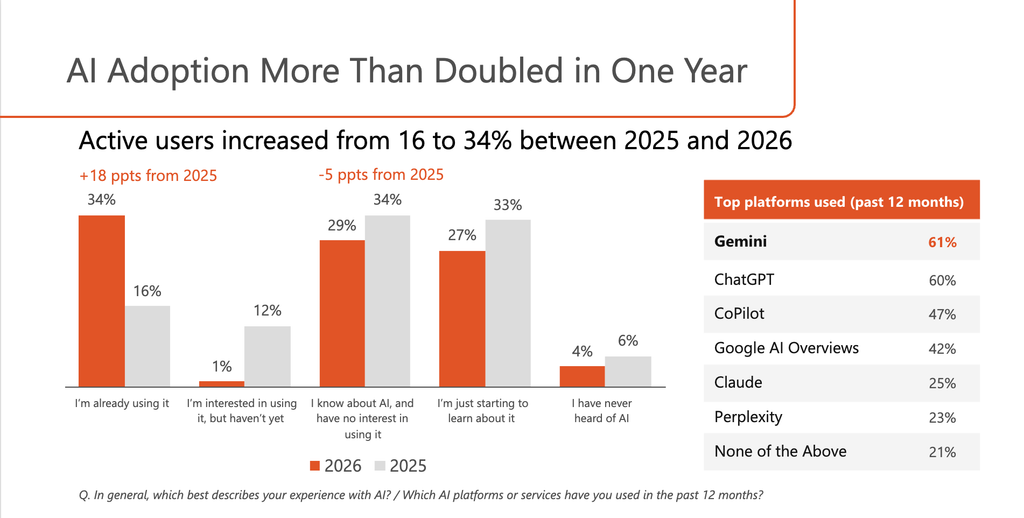
Media Logic’s survey has found that AI adoption among adults 63–75 jumped from 16% to 34% in just one year, with virtually identical growth across younger (63–68) and older (69–75) cohorts. Furthermore, respondents with high digital confidence were nearly 10 times more likely to be active AI users than those with middle or low confidence.
These findings are relevant because digital confidence and financial confidence tend to travel together. As boomers grow more comfortable navigating digital tools generally, they’re bringing that same comfort into how they shop for retirement income products, insurance, and banking services.
The Trust Gap and Where It’s Smaller Than You’d Think
Media Logic’s findings support the claim that older adults are more willing to use AI than they are to trust it; which is a gap that also shows up in financial service spheres pertaining to retirement planning, auto insurance shopping, and household budgeting. Many times people will ask an AI tool for a starting point, but still want to verify the answer elsewhere before acting.
The “Skeptics” Are Already Using AI- They Just Don’t Know It
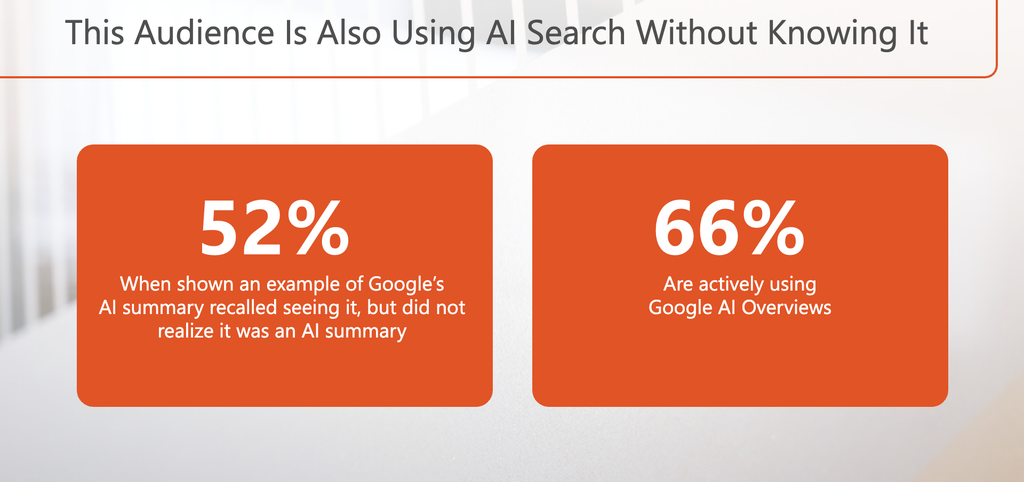
85% of self-identified AI skeptics in the survey said they frequently use Siri, Alexa, or Google AI Overviews. And when shown an example of a Google AI Overview, 52% of respondents recognized having seen one but didn’t realize it was AI-generated. The resistance isn’t to the technology — it’s to the label. A boomer who says they don’t trust AI may already be getting their answer about a Roth conversion or a CD rate from an AI-generated summary without registering it as such.
How AI Can Work Harder
The upside of digital savviness by consumers is substantial. But what about the benefits from an institutional perspective?
PwC recently projected that banks who fully embrace AI could see up to a 15-percentage-point improvement in their efficiency ratio; which would be difficult for other banks to keep up with.
Let’s see how the same AI tools boomers are using to research can also help financial institutions reach and serve them better:
- Predictive lead generation: flagging, from transaction and behavior patterns, when a client is likely approaching a need for a mortgage, retirement product, or long-term care solution.
- Hyper-personalization: generative AI tailoring ad copy, emails, and offers to an individual’s spending habits and life stage.
- Sales and advisor support: AI-assembled data and market context that help human advisors walk into client meetings with a relevant, ready proposal — reinforcing the high-touch relationship this audience still wants.
- Content and campaign automation: planning, testing, and scheduling multi-channel campaigns more efficiently.
Takeaways for Financial Services Marketers
- Audit your AI visibility. Search how your retirement, insurance, and banking products currently appear in AI-generated answers — and identify the gaps.
- Build for GEO/AEO, not just SEO. Structure owned content so generative and answer engines can surface it accurately; this is an ongoing discipline, not a one-time fix.
- Pair AI personalization with human follow-through. Use AI to identify moments of need and personalize outreach, but route high-stakes conversations — wealth transfer, longevity planning — to advisors, since that human trust layer is still what closes the gap.
- Lead with transparency. Clear fee structures, proactive fraud protection, and visible financial-wellness guidance are exactly the kind of clarity that pushed Medicare trust scores higher — and they’re just as available to banks and advisors.
As older consumers move further into digital confidence, treating AI visibility as seriously as any paid channel is becoming table stakes for reaching this audience at the moments, they’re already researching.
Download the full report here