
Being Found Isn’t the Goal Anymore. Being Chosen Is.

A practical point of view on SEO, AEO, and GEO, and what it takes to show up in AI-generated answers
The way consumers get answers has quietly changed — and it’s one of the biggest shifts in how information is found, even if most people haven’t noticed. Before they ever reach your website, many of them have already asked ChatGPT, Gemini, Claude, or Perplexity to compare their options, explain their choices, and recommend a direction. By the time they land on your page- if they land at all- the shortlist may already be set.
Looking at the big picture, this shift in search affects many digital marketing tactics. For decades, the question was “How do we rank?” Today there is a second, sharper question sitting on top of it: “When an AI system answers our buyer’s question, are we one of the sources it trusts and cites?”
This is the behind-the-scenes work Media Logic has been doing well before it had a tidy acronym. We’ve been advising on AI visibility and testing how these systems behave, so we can lead our clients through this shift rather than react to it.
The Acronyms Defined
SEO, AEO, and GEO get talked about as if they are a ladder: master one, graduate to the next. We see them differently. We see them as something closer to a single system working in concert — each discipline shaping how machines find, read, and choose your content, with the others depending on it to work.
- SEO (Search Engine Optimization) lays the foundation. This step ensures your content is crawlable, indexable, and has a clean technical foundation and presence across the web. SEO targets search engines to earn clicks and drive website traffic.
- AEO (Answer Engine Optimization) gets you understood and considered. Content aligned with real questions, structured so it can be summarized and reused as the answer in search engine snippets and quick AI answers.
- GEO (Generative Engine Optimization) gets you chosen by Large Language Models (LLMs). When an AI evaluates competing sources, GEO is about being the one it selects- based on relevance, clarity, credibility, and completeness -for mentions or citations.
Our core belief: the best practices for SEO remain fully relevant. AEO and GEO don’t replace that foundation; they simply raise the stakes on getting it right. Google’s own Search documentation is explicit that there are no additional requirements beyond existing SEO fundamentals for AI Overviews or AI Mode eligibility.
See how these different efforts show up
Media Logic’s Approach to AI Visibility
We map our work to how AI systems move from a user’s question to a cited answer. Each step is a question the system is effectively asking about your content. Here are some basic steps to follow the same theoretical model:
Step 1: Be Present: Use Technical SEO to Support GEO
Using vetted digital marketing tools, determine if content on your site is crawlable, indexable, and present across the web and AI ecosystems. These technical SEO tactics can help increase LLM discoverability:
- Ensure your robots.txt explicitly allows AI crawlers rather than blocking them
- Incorporate relevant schema markup into code. [https://schema.org/docs/schemas.html]
- Consider deploying an llms.txt file — an emerging convention worth watching
Step 2: Be Relevant: Semantic alignment + E-E-A-T (Experience, Expertise, Authoritativeness, Trustworthiness)
Before an AI system uses your content, it’s silently asking two questions: is this on-topic, and is this a source worth trusting? That’s relevance in the AI era. It means proving both, through domain-specific language, expertise, author attribution, and credibility signals.
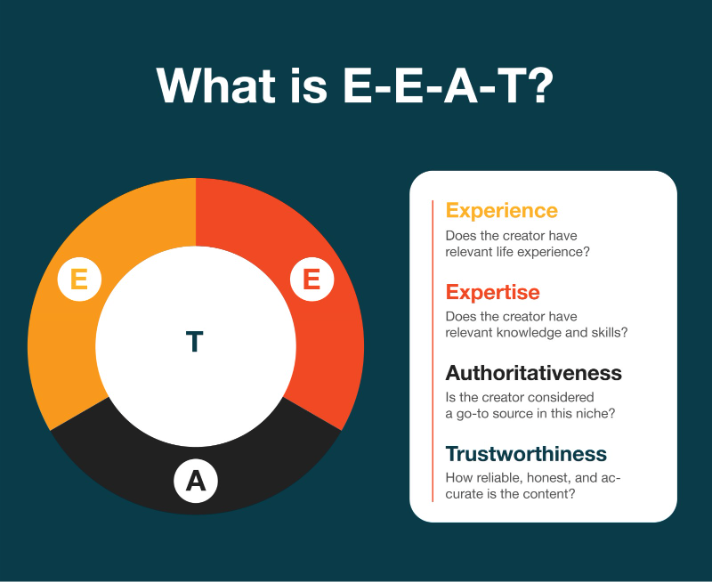
According to SEMrush, a trusted tool used by many digital marketers, here’s a sample of what LLMs look for when selecting citations:
- Credible authorship: Named authors with relevant credentials or experience
- Original content: Firsthand data, insights, or expert commentary
- Clean structure: Semantic HTML, proper headings, and organized page layout
- Freshness: Recently published or updated content (especially in fast-changing industries like AI or finance)
Trust signals aren’t limited to your own content — AI systems also weigh what others say about you elsewhere, and that’s a double-edged sword. Being mentioned isn’t the same as being credible, but a credible mention is now one of the strongest signals you can earn. Press coverage and interviews carry particular weight here, since they read as independently verified rather than self-promotional.
“Relevant” used to mean backlink profiles and mentions on topic-relevant sites. Today, that credibility depends heavily on user-generated content (UGC) — paid and organic, across a variety of mediums. LLMs also pull heavily from where conversations are happening, namely YouTube and Reddit. Marketers should approach these channels with eyes open: they’re a powerful source of authentic signal, but also unmoderated — a single bad thread can shape what an AI says about your brand just as easily as a glowing one.
Step 3: Be understood / Be Extractable
a. Align to real questions including the ones AI generates on its own.
Marketers must determine, “does my content align with the real queries and sub-queries people ask—including the “fan-out” queries an AI generates on its own as it decomposes a question?”
What is a “fan-out” query? AI search systems don’t match your content to a single user question. They automatically break it into multiple related sub-queries, which run behind the scenes to gather information from a wider range of sources before synthesizing one answer.
For example:
Original query: What credit card has the best rewards offer for luxury travel?
Likely fan-out sub-queries:
- What credit cards offer the highest travel rewards points/miles per dollar spent?
- What credit cards include airport lounge access?
- Which credit cards partner with luxury hotel loyalty programs? (i.e. Marriott Bonvoy, Hilton Honors, World of Hyatt)
This means your content can surface in an AI-generated answer even if it doesn’t match the user’s exact wording (it only needs to match one of the sub-queries). Overall, marketers should optimize content for comprehensive topical coverage (subtopics, related questions, and intents) rather than a single keyword phrase.
b. Structure content so AI can actually extract it
Now that you’ve answered the questions your audience and the LLMS are looking for, we take the Q&A layer deeper. Looking within your content, are the answers to possible questions clear, structured, and easy for LLLMs to extract and use?
- Lead with the answer. Answer-first sections, key takeaways or summaries that stand on their own, are far easier for a system to lift and cite than answers buried three paragraphs into a narrative.
- Match structure to question type. Structure that mirrors the question type gets extracted more reliably than prose alone. For example, “What is” questions call for a clear definition up top, and comparison questions call for a table.
- Use headers as extraction anchors. Help both search crawlers and AI systems map your content to specific questions by using descriptive H2/H3 headers that mirror likely sub-queries.
- Add structured data markup. FAQ schema, HowTo schema, and article schema give AI systems a machine-readable shortcut to your content’s structure, on top of good formatting.
Pro tip: Incorporate multimedia into your content — supporting videos, diagrams, charts, calculators — and name and tag them descriptively (e.g., “heloc-vs-home-equity-loan-comparison.mp4,” not “video_final2.mp4”). AI tools increasingly rely on multi-modal signals to rank and interpret content, and a generic filename is a missed opportunity.
Step 4: Get Cited and Mentioned: GEO
Among the sources that are present, relevant, and extractable, which does the AI actually choose?
This step is where selection turns on relevance, clarity, credibility, and completeness. Here is where tactics are handy, as we map out ways to earn this:
Make your content more citable. Several moves consistently strengthen the credibility signals AI systems weigh:
- Add author bios with real credentials and relevant experience.
- Include original visuals—screenshots, diagrams, and frameworks you created rather than stock imagery.
- Bring proprietary data or expert quotes to the page to establish first-hand authority. (including relevant internal and external links)
- Share real-world examples and case studies that demonstrate outcomes, not just claims.
- Keep branding, bylines, and schema consistent across the site so systems can reliably connect with the entity, the author, and the topic.
- Remember to keep facts, entities, and figures consistent across your site, your profiles, and third-party listings, since AI systems cross-check and reward that consistency; earning content genuine third-party validation through PR, mentions, and references from authoritative sources.
- Treat GEO as an ongoing discipline rather than a one-time pass.
Where we Part Ways with the Hype
A great deal of GEO advice circulating right now is, frankly, just hype without data points. Our point of view is becoming more disciplined, as we stay abreast of evolving practices.
- Beware of formatting tricks. Research on GEO finds that formatting tricks carried over from traditional SEO (like keyword stuffing) do little or nothing to improve visibility in AI-generated answers, which instead favor substantive additions like statistics, citations, and quotations. Google also doesn’t prescribe special formatting for AI readability but provides structured tips on how to increase visibility (i.e. simplified UX, structured info that follow previous SEO best practices).
- Headings and real questions matter most. Research from AirOps found that structured, question-aligned content performed better. With that, the biggest lever was when headings aligned to actual queries and fan-out queries, with content that answers real questions.
- Schema is for understanding, not a citation cheat code. In GEO/SEO, Schema, aka structured data markup (a standardized vocabulary from Schema.org), is added to a website’s code to assist search engines and AI systems with understanding the meaning and context of your content. Google has stated that this structured data helps with understanding but is not a special requirement to get cited.
- AEO is not just for Google. And you can’t assume the answers and citations one user sees will replicate for the next. Variability is inherent, which is exactly why a disciplined foundation outweighs chasing any single result.
A Candid Word on Measurement
We won’t oversell what can be measured today. Some respected voices argue AI visibility isn’t cleanly measurable yet, and we take that seriously. What is emerging is encouraging: Google is rolling out Search Console reporting for generative experiences (impressions and pages, though no click data yet), and Bing Webmaster Tools already offers an AI Performance dashboard showing how your site content is used in AI-generated answers across Microsoft CoPilot and Bing AI summaries. There are also existing tools from reputable firms that claim to provide measurements, but their validity has been questioned. As a result, our team views all of this information as directional, and Media Logic is developing a proprietary tool to help us gauge AI visibility and readiness.
Why This Matters Even More in Regulated Industries
For financial services and healthcare organizations, the stakes climb sharply. When an AI system summarizes a financial product, a health plan, a treatment option, or eligibility rules, accuracy and trustworthy claims carry compliance and real-world consequences.
Note: You may have heard the term YMYL, which stands for “Your Money or Your Life.” In SEO, it refers to web pages containing topics that can significantly impact a user’s health, financial stability, safety, or general well-being. Because inaccurate advice on these subjects can cause real-world harm, Google holds this content to the highest possible standards.
Therefore, being the source an AI selects and cites correctly becomes a matter of brand safety, not just visibility.
We’ll go deep on each of these in future dedicated pieces, covering the specific signals, risks, and plays that matter most in those environments. This is the foundation they’ll build from.
Where Your Organization Can Get Started
Perhaps you’re already ahead of the curve and actively engage in the practices discussed in this article. But if your brand hasn’t, or you’re unsure of what capacity your team is working on AEO / GEO efforts: do not worry. You don’t need to boil the ocean.
In our experience, the highest-leverage moves are also the most fundamental:
- Get the foundation right. Crawlability, access, and clean technical SEO still underwrite everything.
- Align real questions. Map headings and content to the queries and fan-outs your buyers actually ask.
- Be Extractable. Structure your content in clear, self-contained pieces, using direct answers, question-based headings, and concise factual statements, so AI engines can lift a clean response straight from your page without needing surrounding context.
- Earn selection. Build the authority, clarity, and completeness that make you the source worth citing.
- Measure what you can, honestly. Treat today’s signals as directional and improve from a real baseline.
Media Logic has been guiding clients through this shift since it had a name. If you want to understand where your most important pages stand with AI systems today, that’s a conversation we’d welcome—and we have some new ways to help that we’ll be sharing shortly.