Pay Later, Budget Now: How BNPL Is Reshaping Everyday Consumer Finance
Prefer to Listen? Hear directly from Media Logic’s Financial Services team on the latest BNPL trends and what it means for FS marketers:
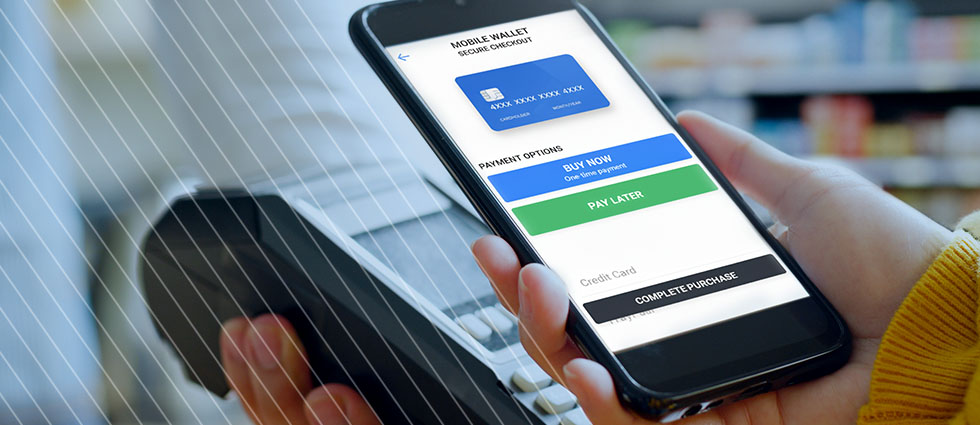
Buy Now, Pay Later (BNPL) is no longer a novelty reserved for sneaker drops and flat-screen TVs. It has quietly become a household budgeting tool, woven into how consumers pay for groceries, utility bills, subscription services, and travel. That shift has profound implications for banks, credit unions, payment issuers, and fintechs — not just in product strategy, but in how marketing teams attract, retain, and engage customers.
Here is what the data is telling us and what it means for your next campaign.
From Discretionary Splurge to Everyday Essentials
The defining story of BNPL in 2026 is a category migration. What initially began as a checkout convenience for electronics and apparel shifted into fintechs serving larger transactions such as vet bills, healthcare / dental needs, and home improvement. Over time, BNPL morphed again into recurring and essential spending territories. According to PYMNTS Intelligence’s February 2026 Pay Later Ecosystem Report, consumers are now using BNPL and credit card installment plans to manage groceries, utilities, and subscription renewals; folding installment credit into the rhythm of monthly household obligations rather than treating it as an occasional bridge for larger purchases.
This is not a fringe behavior. PYMNTS Intelligence reports that users applying BNPL to essential or recurring expenses were more likely to pay interest (32%) than those keeping it to discretionary spending (25%) — a signal that for many households, BNPL has become less about indulgence and more about cash flow management between paychecks.
The Morgan Stanley Research team has noted similar patterns, observing that consumers are “increasingly using BNPL for everyday items like clothing and groceries, rather than to pay off big-ticket items,” and flagging that growth in this direction warrants close attention from investors and institutions alike.
The takeaway for financial services marketers: BNPL is now competing for wallet share in categories your institution likely already owns. That challenges current marketing campaigns to focus more on retention efforts than simply acquisition.
The BNPL Buyer
Understanding the BNPL consumer requires moving beyond a single persona. The user base has diversified considerably.
Millennials and “bridge Millennials” are leading adoption. PYMNTS Intelligence found that over 4 in 10 millennials (45%) and bridge millennials (42%) used credit card installment plans in the prior three months, with one-quarter of each group also relying on BNPL. Importantly, these rates exceed both Gen X and Gen Z — a finding that counters the assumption that BNPL is purely a Gen Z phenomenon.
Gen Z and Millennials share a strong affinity for experiences. Research from Numerator found that these two cohorts are 50% more likely than average to use BNPL for concerts, festivals, and personal travel, and are also more inclined to finance exercise equipment — categories driven by lifestyle identity as much as economics.
Financial stress amplifies usage. Among consumers living paycheck to paycheck, 36% used credit card installments and 18% used BNPL, compared with 25% and 9%, respectively, among those with more financial breathing room (PYMNTS, 2026). This matters for segmentation: financial wellness is a meaningful variable for predicting BNPL engagement, not just demographics.
High earners are increasingly in the mix. The days of BNPL as a purely lower-income tool are fading. As Chargeflow’s analysis of the market notes, high earners are now showing increasing adoption, which broadens both the product appeal and the competitive threat BNPL poses to traditional revolving credit.
The Competitive Pressure on Traditional Institutions
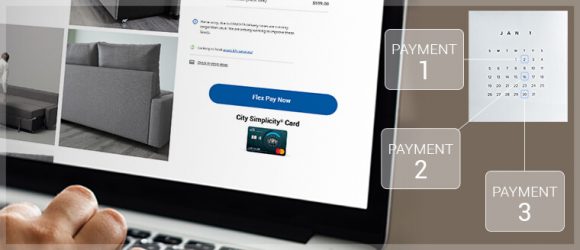
Banks and credit unions are not passive observers in this story. Several major issuers — Chase, Citi, and American Express among them — have built card-linked installment products that are beginning to gain meaningful traction. In fact, Plan It by American Express, Chase’s Pay Over Time, and Citi Flex Pay swept J.D. Power’s 2025 BNPL satisfaction ratings, demonstrating that established institutions can compete effectively when they invest in the experience.(EMARKETER, 2025)
Fintechs, however, still hold the origination advantage. Providers like Klarna, Affirm, and PayPal benefit from deep merchant integrations, mobile-first interfaces, and frictionless checkout experiences. Affirm alone reported 24.1 million active consumers as of early 2026 (EMARKETER, 2025). These platforms are not waiting for consumers to come to them — they are embedded directly in the purchase path.
The Federal Reserve Bank of Richmond framed the competitive dynamic clearly: merchants benefit from BNPL not only because it increases conversion rates, but because consumers spend more when it is available. That behavioral insight belongs in every financial services marketer’s toolkit.
Regulatory Uncertainty Creates a Marketing Opportunity
The BNPL regulatory environment is in flux. The Consumer Financial Protection Bureau (CFPB) has signaled a move away from classifying BNPL providers as credit card issuers, introducing uncertainty around consumer protections and disclosure requirements (EMARKETER, 2025). Meanwhile, Numerator found that even among current BNPL users, 53% support stronger regulations — including clearer disclosures and fee caps.
This consumer appetite for transparency is a genuine opportunity for traditional financial institutions. Banks and credit unions can differentiate their installment products on the basis of clarity, trust, and consumer protection (values that already anchor their brand positioning). In a landscape where fintech BNPL providers are under scrutiny, leading with responsible lending messaging is not just good ethics; it is smart marketing.
What This Means for Sales and Marketing Teams
The evolution of BNPL demands a strategic response across several dimensions:
- Revisit your installment product positioning. If your institution offers a card-linked installment option, is it visible, simple, and discoverable at the moment of decision — including digital and mobile channels? Consumers increasingly treat BNPL and credit card installment plans as interchangeable. Your product needs to win at the point of consideration.
- Segment your audience by financial lifestyle, not just demographics. The PYMNTS data shows that financial stress and paycheck-to-paycheck status are stronger usage predictors than age alone. Direct mail and digital campaigns can be targeted more precisely when financial wellness signals are incorporated into models alongside generational cohort data.
- Build trust-forward messaging. Especially for Millennial and Bridge Millennial consumers, who are the most active installment users and the most likely to incur interest charges, messaging that emphasizes transparency: clear terms, no surprises, consumer-side protections that will resonate more than pure feature promotion.
- Use omnichannel to reach the Millennial core. Given that Millennials lead BNPL and installment adoption, an integrated strategy that combines direct mail (which millennials continue to value) with digital touchpoints creates the kind of surround-sound presence that reinforces brand recall at the moment of financial decision-making. As we have noted previously, 91% of marketers report that direct mail in an omnichannel strategy positively impacts campaign performance (SeQuel, as cited by Media Logic).
- Watch the category expansion closely. BNPL moving into groceries and utilities means consumers are financing items they never financed before. That changes the risk profile of BNPL portfolios — and the marketing conversation around them. Staying current on usage data and product evolution is essential.
The Bottom Line
BNPL has matured into a genuine financial management tool, not a checkout gimmick. For financial services marketers, maturation carries both threat and opportunity. Institutions that respond with relevant, well-positioned installment products — communicated clearly, targeted precisely, and delivered across integrated channels — are positioned to deepen engagement with the Millennial core and capture consumers who are actively rethinking how they manage cash flow.
The question is no longer whether BNPL matters to your institution. It is whether your marketing strategy reflects how much it already matters to your customers.